Pretoria Accommodation
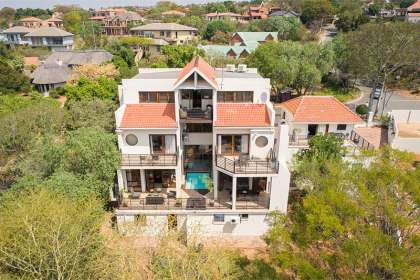
Jopasso Guest House
Bed & Breakfast Accommodation in Wapadrand
Pretoria - Tshwane
Jopasso Guest House offers luxurious bed and breakfast accommodation and self catering accommodation in Wapadrand, Pretoria /Tshwane in Gauteng. Situated against the Bron Mountain in the Eastern suburbs of Pretoria. It has spectacular views... …see more for bookings / enquiries and info.
The Village in Hatfield
Bed & Breakfast Accommodation in Hatfield
Pretoria - Tshwane
The Village In Hatfield provides bed and breakfast accommodation in Hatfield, Pretoria / Tshwane. The Village in Hatfield is a delightful guesthouse offering a cluster of separate units, perfectly appointed for a comfortable stay in the heart of Pretoria. …see more for bookings / enquiries and info.
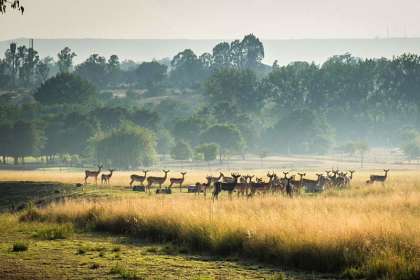
Guesthouse @ 56
Room Only / Limited SC Accommodation in Mooiplaats
Pretoria - Tshwane
Guesthouse @ 56 is an elegant country guesthouse in Mooiplaats, Pretoria. The guesthouse is conveniently situated in the Mooiplaats area, south east of Pretoria, and just 4 km from the M6 and 6 km from the Silver Lakes Estate and Golf course. …see more for bookings / enquiries and info.
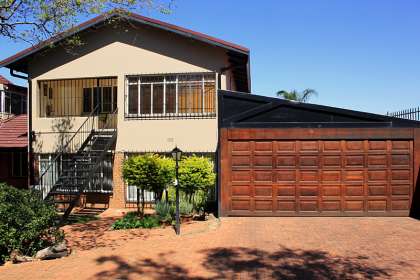
Fralande
Self Catering Apartment, Flatlet Accommodation in Waverley, Pretoria
Pretoria - Tshwane
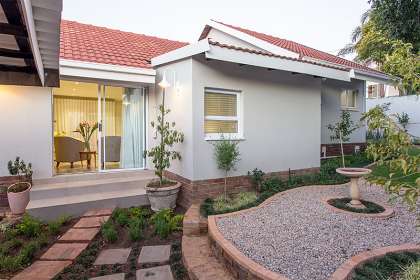
Fralande Lodge offers 2 self catering accommodation units in the Pretoria suburb of Waverley in Gauteng. (The units sleep 4 and 6). Overlooking a beautiful garden where one can find peace and tranquility. We have our guests best interest at heart... …see more for bookings / enquiries and info.
The Aviary
Self Catering Apartment, Flatlet Accommodation in Waterkloof Glen
Pretoria - Tshwane
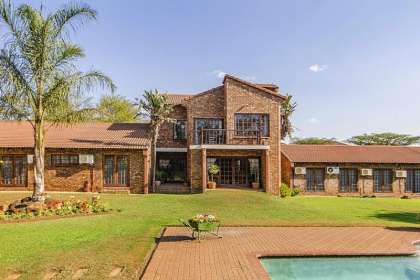
The Aviary offers self catering accommodation in Waterkloof Glen in the south-west of Pretoria. We offer two units, The Sparrow (sleeps 2) and The Swallow (sleeps 4). Each with en-suite bathrooms (shower and bath), HD flat screen with full package DSTV. …see more for bookings / enquiries and info.
Peters Guesthouse
Bed & Breakfast Accommodation in Equestria
Pretoria - Tshwane
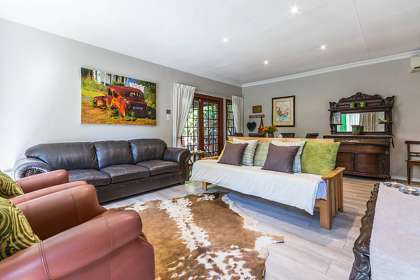
Peter's Guesthouse offers bed and breakfast accommodation in Equestria, Pretoria. Equestria is located to the east of Pretoria close to the N1 which is very handy for traveling into the Pretoria CBD. …see more for bookings / enquiries and info.
Waverleysrest
Self Catering House, Cottage, Chalet Accommodation in Waverley, Pretoria
Pretoria - Tshwane
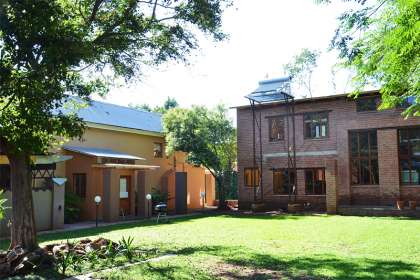
Waverleysrest offers 2 self-catering cottages located in the suburb of Waverley in Pretoria/Tshwane. The sunny and spacious self catering cottages can sleep up to 6-7 guests and exudes a homely appeal. The kitchens are fully equipped... …see more for bookings / enquiries and info.
Bed & Breakfast in Hatfield
Bed & Breakfast Accommodation in Hatfield
Pretoria - Tshwane
Bed and Breakfast in Hatfield - as the name suggests, provides bed and breakfast accommodation, but also self catering in Hatfield, Pretoria / Tshwane in the Gauteng province. We are close to the Pretoria CBD and bustling Hatfield is a 10min walk away. …see more for bookings / enquiries and info.
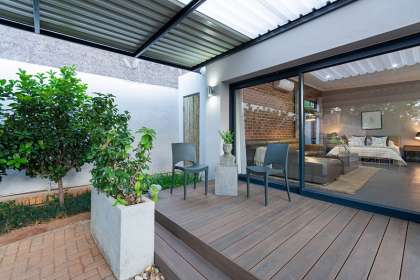
Queensrest
Self Catering Apartment, Flatlet Accommodation in Queenswood
Pretoria - Tshwane
Queensrest provides self catering accommodation in Queenswood Pretoria in Gauteng. Centrally situated in the established suburb of Queenswood, just a short distance from the Pretoria CBD. 6 Self-catering units to choose from. (Units sleep 4 - 6 adults). …see more for bookings / enquiries and info.
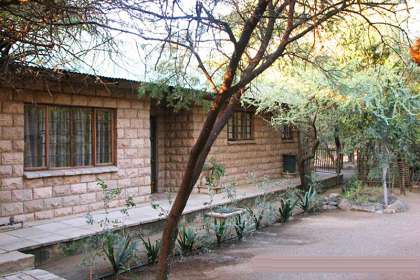
Little Bushveld
Self Catering House, Cottage, Chalet Accommodation in Bon Accord
Pretoria - Tshwane
Little Bushveld offers self catering accommodation in Bon Accord near Pretoria North in Pretoria / Tshwane. We offer 6 chalets ranging from a 2 sleeper to 7 sleeper. These very private self catering chalets on a smallholding are ideal for a real "Slow-Lif …see more for bookings / enquiries and info.
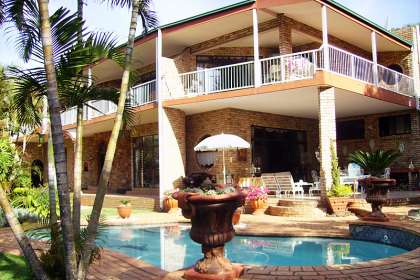
Swan-Lake Luxury Guesthouse
Bed & Breakfast Accommodation in Montana Park
Pretoria - Tshwane
Swan-Lake Luxury Guesthouse offers bed and breakfast accommodation in Montana Park in Pretoria, Gauteng. Montana Park is a quiet leafy northern suburb of Pretoria which offers easy access to the Pretoria CBD. Our bed and breakfast is set in a beautiful... …see more for bookings / enquiries and info.
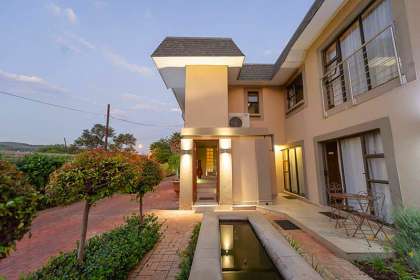
Green Valley Lodge
Bed & Breakfast Accommodation in Wonderboom South
4.6 km from Pretoria
Green Valley Lodge is a luxury guesthouse providing accommodation on a bed and breakfast basis in Wonderboom South, Greater Pretoria, Gauteng. Green Valley Lodge is located right in the heart of Wonderboom South a suburb of Pretoria, nestled below the Won …see more for bookings / enquiries and info.
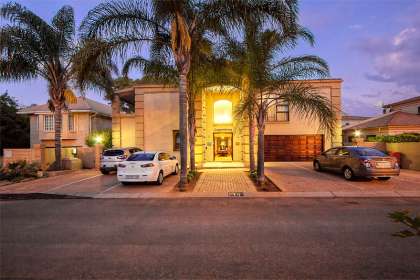
Leopardsong Manor
Bed & Breakfast Accommodation in Centurion Golf Estate
14.1 km from Pretoria
Leopardsong Manor offers bed and breakfast accommodation in the Centurion Golf Estate in Centurion, Gauteng. Our bed and breakfast facility in Centurion Golf Estate has been noted for its stylish interior and spacious rooms overlooking one of the best... …see more for bookings / enquiries and info.
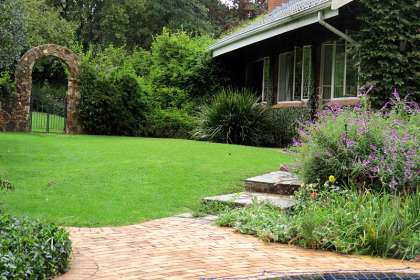
Dunkelly
Self Catering Apartment, Flatlet Accommodation in Centurion
14.6 km from Pretoria
Dunkelly offers self catering accommodation in the Centurion suburb of Irene. Situated between Pretoria and Midrand in the quaint, picturesque and secure village of Irene, Dunkelly can be found nestled in a country village steeped in history... …see more for bookings / enquiries and info.

Pheasant Hill Bed & Breakfast
Hotel / Boutique Hotel Accommodation in Doornkloof East
17.2 km from Pretoria
Pheasant Hill offers bed and breakfast accommodation in Doornkloof East in Centurion, Gauteng. Experience the atmosphere of the countryside outside the Pretoria city centre. We are just 1km from the Rietvlei Dam Nature Reserve. …see more for bookings / enquiries and info.
 Pretoria at night, looking south across the city towards the Voortrekker Monument on the horizon © Kwang Cho, License
 Grootkerk, Bosman Street, Pretoria. The corner stone of this building, which was designed in the style of the Dutch Renaissance, was laid by General Louis Botha on 11 May 1903 and the church was inaugurated on 30 September 1904. © PHParsons, License
 Designed by the Dutch architect, Willem de Zwaan the building was opened on 2 December 1897. The ground floor was used by the Nedelandsche Bank en Crediet Vereeniging. Current use: Tourism Information. © Cvanrooyen, License
 Burgers Park is a park located in the center of Pretoria. Founded in the 1870s as a botanical garden, it covers four acres and has been declared a South African National Monument. © Cvanrooyen, License
 Melrose House built in 1886 is a stately mansion and museum located on Burgers Park in Pretoria. The Treaty of Vereeniging, which ended the Second Boer war (1899 - 1902) was signed there on 31 May 1902. © Leo za1, License
 The Union Buildings form the official seat of the South African Government. Designed by Sir Herbert Baker in 1908, building began in 1909 and was completed in 1913. © PaulaGruben, License
 Pretoria City Hall is a large building in Pretoria city centre, which was built in 1931 and inaugurated in 1935 in order to celebrate the city-status of Pretoria obtained in 1931. © Leo za1, License
 The Voortrekker Monument is 40 metres high, with a base of 40 metres by 40 metres. The design is influenced by European monuments such as the Dôme des Invalides in France and the Völkerschlachtdenkmal in Germany. © Leon Pelser, License
 The Pretoria National Botanical Garden is one of South Africa's nine National Botanical Gardens and is located between Pretoria Rd and Cussonia Ave in Brummeria, eastern Pretoria. The 76 hectares (0.76 km2) garden was established in 1946. © JMK, License
 The Ditsong National Museum of Natural History, colloquially the Transvaal Museum, is a natural history museum situated in Pretoria. It was founded as the Staatsmuseum (Afrikaans for "State Museum") of the ZAR on 1 December 1892. © Luckymelon, License
 Replica of a 155 mm Creusot "Long Tom" canon at Fort Klapperkop outside Pretoria. The original was manufactured by Schneider et Cie in Le Creusot, France and used by the Boers in the Second Boer War (1899 - 1902) as field guns. ©
 Pretoria
Pretoria was founded in 1855 and named after Andries Pretorius, a Voortrekker leader. The city was the Capital of the Zuid-Afrikaansche Republiek from 1860 until 1910, administrative capital of the Union of South Africa from 1910 until 1961, and of the Republic of South Africa from 1961. Pretoria is situated in the transitional area between the Highveld and the Bushveld, approximately 50 km north of Johannesburg. It lies in a warm, well-sheltered, fertile valley, surrounded by the hills of the Magaliesberg range.
Pretoria is one of South Africa's leading academic cities, and it is home to both the University of Pretoria and to UNISA, the University of South Africa. Overlooking the whole of the city from a hilltop are the magnificent Union Buildings, built in golden stone with Italian tiled roofs. Avenues of purple flowering jacaranda trees are wide enough to turn a team of oxen, this is why Pretoria is known as the Jacaranda city. Pretoria is an important industrial centre, with heavy industries including iron and steel casting as well as automobile, railroad and machinery manufacture. The city has a number of scientific institutes and an abundance of open spaces with parks, bird sanctuaries, nature reserves and a zoo.
Pretoria, the administrative capital of South Africa, offers a rich mix of cultural, historical, and natural attractions.
Here are 15 things to see or do in Pretoria:
- Union Buildings: Iconic government offices with beautiful gardens, offering panoramic views of the city.
- Voortrekker Monument: A massive granite structure commemorating the Voortrekkers who left the Cape Colony.
- Pretoria National Botanical Garden: A serene escape showcasing South Africa's indigenous plants.
- Freedom Park: A heritage site honoring the country's journey to freedom.
- Kruger House Museum: The historical residence of Paul Kruger, a significant figure in South African history.
- National Zoological Gardens of South Africa: One of the largest zoos in the country, home to a variety of animals.
- Rietvlei Nature Reserve: A large nature reserve ideal for game viewing, bird watching, and hiking.
- Melrose House Museum: A Victorian mansion where the Treaty of Vereeniging was signed, ending the Second Boer War.
- Hazel Food Market: A vibrant market offering local and international delicacies every Saturday.
- Church Square: The historic center of Pretoria, surrounded by important buildings like the Palace of Justice.
- Loftus Versfeld Stadium: A major sports venue hosting rugby and soccer matches.
- Ditsong National Museum of Natural History: Formerly the Transvaal Museum, featuring extensive natural history exhibits.
- State Theatre: South Africa's largest theatre complex, showcasing a variety of performing arts.
- Faerie Glen Nature Reserve: A beautiful natural area perfect for hiking and wildlife spotting.
- Austin Roberts Bird Sanctuary: A sanctuary named after a renowned ornithologist, ideal for bird watchers.
These attractions highlight Pretoria's diverse offerings, from historical landmarks and cultural sites to natural reserves and vibrant markets.
- Pretoria Central (0.46km)
- Wonderboom South (4.62km)
- Hatfield (4.92km)
- Queenswood (6.73km)
- Pretoria North (7.19km)
- Waverley, Pretoria (8.25km)
- Montana Park (9.97km)
- Waterkloof Glen (10.61km)
- Centurion (11.29km)
- Bon Accord (11.69km)
- Centurion Golf Estate (12.85km)
- Irene (13.99km)
- Equestria (15.08km)
- Wapadrand (15.32km)
- Doornkloof East (15.68km)
- Church Square - Pretoria (0.05km)
- Pierneef Museum - Pretoria CBD, Gauteng (0.22km)
- National Library of South Africa - Pretoria Central (0.37km)
- Ditsong Kruger Museum - Central Pretoria (0.64km)
- Mzansi Fela Festival - South African State Theatre, Pretoria (0.67km)
- South African State Theatre - Pretoria (0.70km)
- Geological Survey Museum of Pretoria - Pretoria Central, Gauteng (0.71km)
- Ditsong National Museum of Natural History - Central Pretoria (0.76km)
- Burgers Park - Central Pretoria (0.98km)
- Melrose House Museum - Central Pretoria (1.12km)
- National Zoological Gardens (Pretoria Zoo) - Pretoria (1.17km)
- Transoranje Christmas Market / Kersmark - Pretoria (2.20km)
- Unisa Art Gallery - University of South Africa, Pretoria (2.20km)
- Freedom Park Heritage Site & //hapo Museum - Pretoria (2.32km)
- Freedom Day Celebrations - Union Buildings, Pretoria (2.50km)
- Union Buildings - Pretoria, Gauteng (2.51km)
- Pretoria Art Museum - Pretoria, Gauteng (2.55km)
- UNISA - University of South Africa (Pretoria) (2.75km)
- Weskoppies Psychiatric Hospital - Pretoria, Gauteng (3.08km)
- Fort Schanskop - Groenkloof, Pretoria (3.44km)
- Voortrekker Monument Heritage Site - Pretoria (3.56km)
- Loftus Versfeld Stadium - Arcadia, Pretoria (3.62km)
- Magnolia Dell Park - Muckleneuk, Pretoria (3.79km)
- Intiem Love Bridge - Bailey's Muckleneuk, Pretoria (3.81km)
- Mapungubwe Museum - University of Pretoria, Hatfield, Pretoria (4.34km)
- Fort Klapperkop Military Museum - Pretoria (4.42km)
- University of Pretoria - Hatfield, Pretoria (4.48km)
- Pretoria Golf Club - Pretoria, Gauteng (4.66km)
- Austin Roberts Memorial Bird Sanctuary - Muckleneuk, Pretoria (4.79km)
- Services Golf Club - Centurion, Pretoria (4.93km)