Phalaborwa District Accommodation
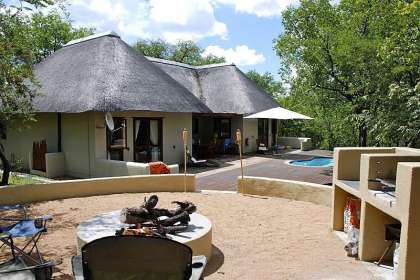
Zimswazi Golf Lodge
Self Catering House, Cottage, Chalet Accommodation in Phalaborwa District
Kruger National Park & Mopani
Zimswazi Golf Lodge offers luxury self catering bush lodge accommodation in the Phalaborwa District in the Valley of the Olifants, Limpopo. This secluded accommodation is set in the renowned Hans Merensky golf course. The Lodge sleeps 4 adults in 2... …see more for bookings / enquiries and info.

Elephant Walk Accommodation and Tours
Self Catering Rooms With Communal Kitchen in Phalaborwa District
Kruger National Park & Mopani
Elephant Walk offers Bed & Breakfast and Backpacker accommodation in Phalaborwa near the entrance gate to the Kruger National Park. Elephant Walk is a very popular B&B and Backpackers visited by guests from all over the world. …see more for bookings / enquiries and info.

Bateleur Main Camp
Game Reserve And Bush Lodge Accommodation in Timbavati
46.1 km from Phalaborwa District
Bateleur Safari Camp is ideal for couples, singles and small groups who are looking for a Timbavati safari that simultaneously exceeds expectations and offers an up-close experience of the true African bush and wildlife. …see more for bookings / enquiries and info.

Olifants Restcamp
Game Reserve And Bush Lodge Accommodation in Kruger Park
61.4 km from Phalaborwa District
Looming several hundred feet over the Olifants river bushveld is an eponymous hilltop restcamp which provides an authentic experience of this area's rugged wildlife, varied flora and exquisite panoramic view. …see more for bookings / enquiries and info.

Orpen Restcamp
Game Reserve And Bush Lodge Accommodation in Kruger Park
64.8 km from Phalaborwa District
The small, well known camp of Orpen is popular for its easy access to surrounding grassland vistas, with grazers accompanying the sweet grass, and predators trailing never far behind. …see more for bookings / enquiries and info.
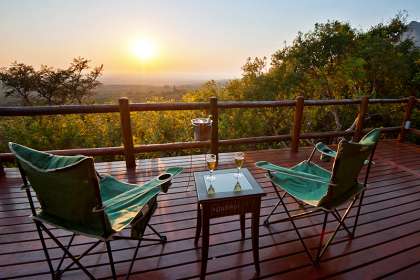
Amafu Forest Lodge
Self Catering House, Cottage, Chalet Accommodation in Kampersrus
69.8 km from Phalaborwa District
Amafu Forest Lodge provides authentic self catering bush lodge accommodation in Kampersrus, in the Blyde River Canyon area in the Valley of the Olifants region of Limpopo. Choose from 7 chalets, being either a 2-sleeper, 4-sleeper or 8-sleeper. …see more for bookings / enquiries and info.

umVangati House
Bed & Breakfast Accommodation in Kampersrus
70.6 km from Phalaborwa District
umVangati House provides stunning and exclusive bed and breakfast accommmodation in the Hoedspruit District in the Limpopo province. Tucked away in the heart of the Blyde River Canyon, one of South Africa's most glorious scenic destinations, umVangati... …see more for bookings / enquiries and info.

Shikwari Nature Reserve
Bed & Breakfast Accommodation in Hoedspruit District
71.5 km from Phalaborwa District
Shikwari Bush Lodge offers fully catered accommodation near the J.G Strydom Tunnel in the Hoedspruit district of the valley of the Olifants in Limpopo. Situated in Shikwari Nature Reserve, we offer two camps on the reserve close to Kruger Park... …see more for bookings / enquiries and info.

Wild Olive Tree Camp
Game Reserve And Bush Lodge Accommodation in Kruger Park
71.8 km from Phalaborwa District
The Wild Olive Tree Camp is right here on the border of the Kruger National Park at the Orpen and Manyelti Gate where a unique project has been established. A semi-luxury tented camp with spacious cottage tents was built and is operated by members of the …see more for bookings / enquiries and info.

Satara Restcamp
Game Reserve And Bush Lodge Accommodation in Kruger Park
82.4 km from Phalaborwa District
Satara rest camp owes its bustling demeanour to its 200+ person accommodation, a community of campers set out in a series circles in the middle of the Kruger National Park. …see more for bookings / enquiries and info.
Phalaborwa District
Phalaborwa District is a fascinating corner of Limpopo where ancient mining traditions, wildlife-rich bushveld and the great waterways of the Lowveld come together. Centred on Phalaborwa and stretching towards the western boundary of the Kruger National Park, the district offers an enticing combination of safari adventures, archaeological discoveries and dramatic natural scenery.
Phalaborwa itself is the district’s main centre and has an unusually long mining history. The name is generally associated with the Sotho phrase “palabora”, traditionally interpreted as “better than the south” or “place better than the south”. Long before modern mining began, the area was known for copper and iron working. Archaeological evidence at Masorini, just outside the town, reveals an ancient industrial landscape where Ba-Phalaborwa communities smelted iron and worked copper. Visitors can explore reconstructed furnaces, smelting sites and a traditional village, gaining a fascinating insight into the sophisticated metalworking traditions that flourished here centuries ago.
Modern Phalaborwa grew rapidly because of mining, particularly copper extraction at the large open-cast mine. The distinctive landscape around the town still bears the marks of this industry, while mining remains an important part of the local economy. Yet the district’s other great attraction is conservation, and the transition from mine country to wilderness can be surprisingly swift.
The Kruger National Park is the obvious highlight. Phalaborwa Gate provides one of the park’s most convenient entrances and opens into an area characterised by mopane woodland, open savannah and the Olifants River. Game drives offer the possibility of seeing elephant, lion, leopard, buffalo, rhinoceros, giraffe and numerous antelope. The Olifants River is especially important to wildlife and provides some memorable viewpoints as it winds through the park towards Mozambique.
For a different perspective on the landscape, visitors can explore the Letaba and Olifants river systems, where birdwatching is excellent and crocodiles and hippos are often seen. Boat trips and guided wilderness activities in the wider area can provide an enjoyable alternative to conventional vehicle safaris. The district’s warm climate also makes early-morning and late-afternoon outings particularly rewarding, when wildlife is most active and the bush takes on its characteristic golden glow.
Beyond the park, the district is well placed for exploring private game reserves and other Lowveld attractions. Travellers can combine a Kruger safari with cultural experiences, archaeological visits and scenic drives, creating a more rounded understanding of the region. The nearby Mica and Hoedspruit areas provide further access to wildlife reserves and the spectacular landscapes of the Drakensberg escarpment.
The wider Kruger National Park & Mopani Region is renowned for its biodiversity, but Phalaborwa District demonstrates that its appeal extends well beyond wildlife. Ancient mining sites reveal a human history stretching back hundreds of years, while modern communities continue to live alongside one of Africa’s most celebrated protected areas.
For travellers, this makes Phalaborwa an unusually versatile destination. One day can begin with elephants beside the Olifants River, continue with an exploration of ancient smelting furnaces and finish with sunset over the bushveld. It is a place where conservation, culture and industry have left their marks on the same landscape, giving this northern Lowveld district a character all its own.
- Hendrik Van Eck Airport - Phalaborwa, Limpopo (1.50km)
- Ba Phalaborwa Golf Club - Phalaborwa, Limpopo (3.92km)
- Masorini Archaeological Site - nr Phalaborwa, Limpopo (13.07km)
- Grietjie Private Nature Reserve - nr Phalaborwa, Limpopo (19.31km)
- Kruger National Park - Limpopo (22.17km)
- Great Letaba Game Park - nr Phalaborwa, Limpopo (29.32km)