Butha-Buthe Accommodation

Butha-Buthe Test Page
Bed & Breakfast Accommodation in Butha-Buthe
Butha-Buthe District
Butha-Buthe Test Page offers no-existent self catering accommodation in Butha-Butha in the mountainous region of Butha-Butha in Lesotho. This experimental self catering accommodation caters for up to 200000 people as long as they very very small. …see more for bookings / enquiries and info.


Camelroc Guest Farm
Self Catering House, Cottage, Chalet Accommodation in Fouriesburg
8.7 km from Butha-Buthe
Camelroc sits between the two Caledon rivers, close to Caledonspoort border post. Its a good base from which to explore Eastern Free State as well as Lesotho. 6 chalets sleeps 8, 6, 2. Hikers Cabin sleeps 16 Main home has three rooms sleeps 6. …see more for bookings / enquiries and info.
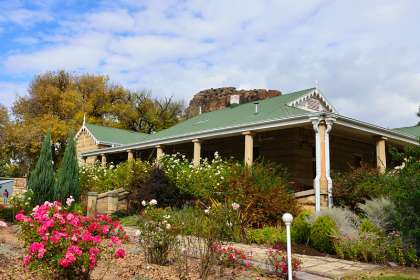
The Rose House
Bed & Breakfast Accommodation in Fouriesburg
16.1 km from Butha-Buthe
The Rose House offers visitors to the Fouriesburg area with self catering or bed and breakfast accommodation. Situated on a 580 hectare farm between Fouriesburg and Clarens on the S325. The main sandstone house was built in 1923 from local sandstone... …see more for bookings / enquiries and info.

The Barbet Country Cottages
Self Catering House, Cottage, Chalet Accommodation in Clarens
17.2 km from Butha-Buthe
The Barbet Country Cottages are situated on a large farm, 17km from Clarens along the magnificent Maluti route, a beautiful, scenic drive, including our very own 'God's Window', overlooking the vast Maluti Mountain ranges. …see more for bookings / enquiries and info.

Mont Plaisir
Self Catering House, Cottage, Chalet Accommodation in Fouriesburg
21.4 km from Butha-Buthe
Mont Plaisir offers self catering accommodation near Fouriesburg, where you can discover and enjoy the beauty and tranquillity of the Eastern Free State Highlands. 4 self catering options are available. …see more for bookings / enquiries and info.

Fairview Estates
Self Catering House, Cottage, Chalet Accommodation in Fouriesburg
24.2 km from Butha-Buthe
Fairview Estates Cottages lies at the end of a 19km valley, described by some as the most beautiful valley in the Eastern Free State. This farm is situated between Fouriesburg and the very popular, proudly South African town of Clarens. …see more for bookings / enquiries and info.

Sediba Lodge
Self Catering House, Cottage, Chalet Accommodation in Clarens
24.6 km from Butha-Buthe
Sediba Lodge offers self catering accommodation in Clarens, the "Jewel of the Free State". The Lodges are spacious, well appointed, fully serviced and offer home from home comfort. The view from all the windows is stunning.. …see more for bookings / enquiries and info.
Butha-Buthe
Butha-Buthe is a historic mountain town in northern Lesotho, set among the foothills and sandstone cliffs of the Maloti Mountains. Its position near the Caledon River and the South African border gives it an important place in the country’s history, while the surrounding scenery makes it an appealing base for exploring the northern highlands.
The name Butha-Buthe is thought to derive from the Sesotho word “buthe”, meaning a place of refuge or hiding. The name is closely associated with the mountain fortress established here by King Moshoeshoe I in the early 19th century. Seeking protection from conflict, Moshoeshoe established a stronghold on the nearby Butha-Buthe plateau before later moving his capital to Thaba Bosiu.
The town’s greatest historical attraction is Butha-Buthe Mountain, where the remains of Moshoeshoe I’s early mountain stronghold can still be explored. The site offers panoramic views across the surrounding valleys and provides an evocative connection with the founding of the Basotho nation. Visitors interested in history can also explore nearby sites associated with the early Basotho kingdom.
The surrounding highlands are ideal for scenic drives, hiking and photography. Sandstone cliffs, grass-covered slopes and deep valleys create some of northern Lesotho’s most characteristic scenery. In summer, the mountain slopes become greener, while winter can bring snow to the higher peaks.
Butha-Buthe is the administrative centre of the Butha-Buthe District, one of Lesotho’s northern districts. The area is particularly well placed for travellers exploring the Maloti Mountains and heading towards attractions such as Afriski Mountain Resort and the spectacular Moteng and Mahlakapese passes.
For visitors, Butha-Buthe offers a rewarding combination of history and mountain scenery. Its connection with Moshoeshoe I gives the town a special significance, while its dramatic surroundings provide an excellent introduction to the highland landscapes that make northern Lesotho so distinctive.
- Maluti Mountains - Free State & Lesotho (4.14km)
- JenLee's Country Shop & Bistro - Fouriesburg, Free State (16.31km)
- Meiringskloof Nature Park - nr Fouriesburg, Free State (18.96km)
- Surrender Hill Monument - nr Clarens, Free State (22.34km)
- Sandstone Heritage Trust - nr Ficksburg, Free State (25.62km)