East Fort - Hout Bay, Cape Town
 The East Fort ruins overlooking the azure bay and framed by the majestic Karbonkelberg Peak in Hout Bay. (Image adapted). © Chapman's Peak Drive
 East Fort Upper Precincts c.1796 Built at the command of General James Craig Acting Governor General following the 1st British Occupation of the Cape of Good Hope. © Eastfort1, License
 Cannon at East Fort, Hout Bay. ©
  The fort originally consisted of a strong stone battery with several mounted 18-pounder cannons, barracks for soldiers, and storage rooms for ammunition and supplies. (Image adapted). © Sothebys Reality Cape Town
East Fort - Hout Bay, Cape Town
Set high above the shimmering waters of Hout Bay, the old East Fort is one of the Cape’s most evocative reminders of its colonial past. Built in 1782 by the Dutch East India Company (VOC), the fort - known in Dutch as Oost Fort, was part of a wider network of coastal defences intended to protect Table Bay and its surrounding settlements from British naval attack during the late 18th century. At the time, Hout Bay was of strategic importance due to its sheltered anchorage and the abundance of timber in its surrounding forests, which were vital for shipbuilding and repair.
The fort originally consisted of a strong stone battery with several mounted 18-pounder cannons, barracks for soldiers, and storage rooms for ammunition and supplies. Its position along what is now Chapman’s Peak Drive was no accident. This elevated site commanded a sweeping view over the bay and its narrow entrance, making it an ideal lookout point. Together with the smaller West Fort on the opposite side of the bay, East Fort was designed to form a deadly crossfire should enemy vessels attempt to enter the harbour.
Though East Fort never saw active combat, its presence was an enduring symbol of the Cape’s military preparedness during a volatile era of maritime rivalry. In later years, the British took over the fort after seizing the Cape Colony in 1795, and it continued to serve as a coastal lookout post well into the 19th century. Over time, however, as naval warfare advanced and Hout Bay’s strategic importance waned, the site fell into disuse and eventual ruin.
Today, East Fort is a national monument and a popular stop for those travelling along the world-renowned Chapman’s Peak Drive. The surviving gun emplacements and weathered stone walls have been partially restored, offering a tangible link to the past. Visitors can explore the remains on foot, and interpretive signs provide insight into the fort’s history and the soldiers who once manned it.
The surrounding views are nothing short of spectacular, looking out over the turquoise sweep of Hout Bay, the fishing harbour below, and the majestic Sentinel rising guard on the opposite shore. The site also marks the start of the hiking trail to Blackburn Ravine, a popular route that winds up the mountainside through indigenous fynbos. For photographers and history lovers, East Fort combines dramatic scenery with the quiet allure of the Cape’s forgotten fortifications, making it a rewarding and atmospheric stop on one of South Africa’s most scenic drives.
Parking available close by.
Accommodation Near East Fort - Hout Bay, Cape Town
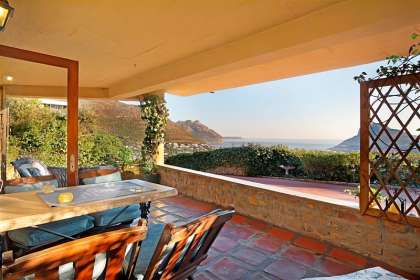
Bayview Mountain Sea-facing Cottages
Self Catering House, Cottage, Chalet Accommodation in Hout Bay
1.8 km from East Fort - Hout Bay, Cape TownBayview Mountain Sea-facing Cottages in Hout Bay are quietly nestled against the forest, on the slopes of the "Skoorsteenkop Mountain" in the desirable Scott Estate area, where the clean mountain air and ocean breezes combine to... …see more for bookings / enquiries and info.

The Gables
Self Catering House, Cottage, Chalet Accommodation in Hout Bay
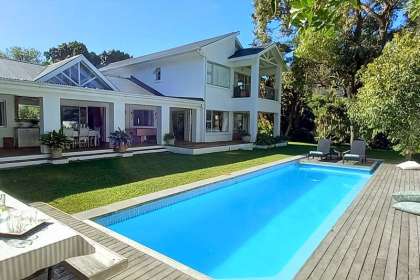
2.2 km from East Fort - Hout Bay, Cape TownThe Gables is a luxury self-catering villa, homely decorated with Colonial and African influences, consists of 5 spacious bedrooms (sleeps 11), 2 lounges with French doors leading onto the garden with sparkling pool and Jacuzzi, 2 fully equipped kitchens …see more for bookings / enquiries and info.
Villa Tranquility Hout Bay
Self Catering House, Cottage, Chalet Accommodation in Hout Bay
2.2 km from East Fort - Hout Bay, Cape TownTranquility Luxury Villa offers self catering accommodation in a good area of Cape Town's Hout Bay and close to Hout Bay beachfront (5 minutes walk), shops and restaurants. This lovely spacious Villa (sleeps 9) has all you need for the perfect holiday. …see more for bookings / enquiries and info.

Karrad Guest Lodge
Self Catering House, Cottage, Chalet Accommodation in Hout Bay
4 km from East Fort - Hout Bay, Cape TownKarrad Guest Lodge provides self catering accommodation in Hout Bay, Cape Town. One bedroom, two bedroom or a three bedroomed cottage at reasonable rates. Lovely pastoral setting with mountain views. …see more for bookings / enquiries and info.

Dreamhouse
Bed & Breakfast Accommodation in Hout Bay
4.1 km from East Fort - Hout Bay, Cape TownMajestically perched above the Hout Bay Valley in Cape Town, Dreamhouse Guest House is a calm oasis from which to enjoy your stay in Cape Town. Each of the 12 beautifully appointed accommodation options offers privacy, comfort and attention to... …see more for bookings / enquiries and info.
Waterland Lodge
Self Catering House, Cottage, Chalet Accommodation in Hout Bay
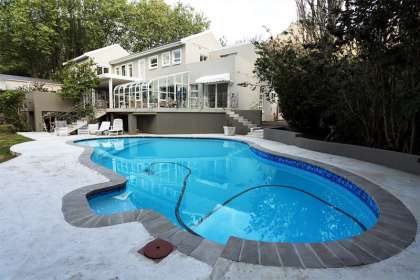
4.9 km from East Fort - Hout Bay, Cape TownWaterland Lodge provides self catering accommodation in Hout Bay, Cape Town. We have 7 self catering cottages to choose from to to ensure a great stay in Hout Bay. Lush river banks, mountain forests and a central location set amongst Hout Bay's... …see more for bookings / enquiries and info.
Le Bonheur Villas and Cottages
Self Catering Apartment, Flatlet Accommodation in Constantia
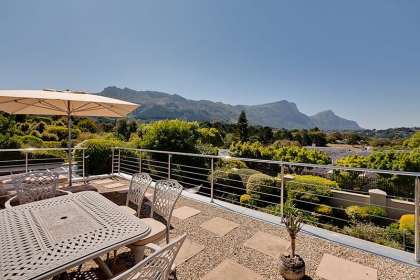
7.4 km from East Fort - Hout Bay, Cape TownLe Bonheur Villa and Cottages offers a selection of self catering accommodation in Constantia, Cape Town. 4 self catering options are available: Villa - 6 bedrooms that sleeps 12, 4 bathrooms (3 en-suite). Protected from the summer winds... …see more for bookings / enquiries and info.
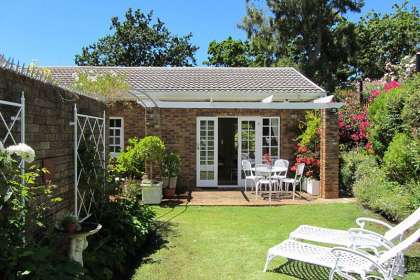
Bel Ombre Cottages
Self Catering House, Cottage, Chalet Accommodation in Constantia
7.8 km from East Fort - Hout Bay, Cape TownBel Ombre Cottages provide self catering cottage accommodation in Constantia, Cape Town. Bel Ombre Cottages are luxuriously furnished and fully equipped self catering cottages in the beautiful Constantia Valley, the ideal base from which to explore... …see more for bookings / enquiries and info.
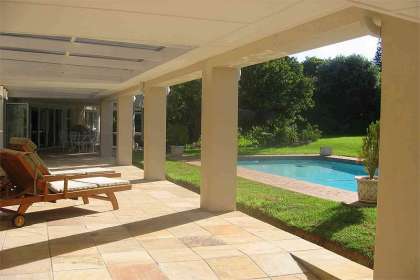
Pepper Hollow
Self Catering Apartment, Flatlet Accommodation in Constantia
7.9 km from East Fort - Hout Bay, Cape TownPepper Hollow offers self catering cottage accommodation in Constantia, Cape Town. The accommodation consists of one self-catering cottage with 2 bedrooms. The main bedroom has a queen size bed & dressing table with an en-suite bathroom. …see more for bookings / enquiries and info.

Constantia Thatch Lodge
Self Catering Apartment, Flatlet Accommodation in Constantia
8.1 km from East Fort - Hout Bay, Cape TownConstantia Thatch Lodge provides a choice of self catering accommodation in Constantia, Cape Town. Constantia Thatch Lodge offers self-catering accommodation for 10 guests in 2 cottages and 2 private suites. Private entrance and patios. Pool, secure parki …see more for bookings / enquiries and info.
- Scott Estate (1.37km)
- Hout Bay (1.79km)
- Berg-En-Dal (1.96km)
- Penzance Estate (2.26km)
- Imizamo Yethu (2.70km)
- Tierboskloof (3.09km)
- Kronenzicht (3.28km)
- Helgarda Estate (3.32km)
- Goedehoop Estate (3.80km)
- Chapmans's Peak Estate (3.94km)
- Mount Rhodes (4.09km)
- Chapman's Peak (4.33km)
- Ryuterplaats Private Mountain Estate (4.36km)
- Kenrock Country Estate (4.37km)
- Noordhoek (4.62km)
- Chapman's Peak Drive - Cape Town (0.52km)
- Hout Bay Museum - Hout Bay, Cape Town (1.60km)
- Hout Bay Seal Rescue Centre - Hout Bay, Cape Town (1.64km)
- Hout Bay Beach - Hout Bay, Cape Town (1.64km)
- Hout Bay Harbour and Mariners Wharf - Hout Bay, Cape Town (1.71km)
- Bay Harbour Market - Hout Bay, Cape Town (1.77km)
- Hout Bay Harbour Festival - Hout Bay, Cape Town (1.80km)
- Constantiaberg - Southern Peninsula, Cape Town (2.00km)
- The Sentinel - Hout Bay, Cape Town (2.79km)
- Tokai Forest - Cape Town, Western Cape (3.53km)
- Duiker Island (Seal Island) - Hout Bay, Cape Town (3.83km)
- World of Birds Wildlife Sanctuary & Monkey Park - Hout Bay, Cape Town (3.89km)
- Clay Café - Hout Bay, Cape Town (4.13km)
- The Red Herring Trading Post - Noordhoek, Cape Town (4.31km)
- Noordhoek Farm Village - Noordhoek, Cape Town (4.36km)
- Sandy Bay - nr Llandudno, Cape Town (4.64km)
- Llandudno Beach - Llandudno, Cape Town (5.32km)
- Noordhoek Beach - Noordhoek, Cape Town (5.32km)
- Constantia Nek Pass - Cape Town (5.57km)
- Buitenverwachting Wine Estate - Constantia, Cape Town (5.64km)
- Constantia Uitsig Bike Park - Constantia, Cape Town (5.80km)
- Constantia Uitsig Wine Estate - Cape Town (5.98km)
- Steenberg Golf Club - Constantia, Cape Town (6.32km)
- Pollsmoor Prison - Tokai, Cape Town (6.82km)
- Groot Constantia Wine Estate - Constantia, Cape Town (6.91km)
- Silvermine Nature Reserve - Cape Town (6.98km)
- Oudekraal Beach - nr Llandudno, Cape Town (6.99km)
- Cecilia Forest - Constantia, Cape Town (7.15km)
- Longbeach Mall, Kommetjie - Cape Town (7.24km)
- Peers Cave - nr Fish Hoek, Cape Town (7.65km)