Pilgrim's Rest Accommodation

Thaba Tsweni Lodge & Safaris
Self Catering House, Cottage, Chalet Accommodation in Graskop
11km from Pilgrim's Rest
Our luxury self catering chalets, have their own gardens with barbeque facilities and secure undercover parking. Each fully equipped chalet includes either one or two bedrooms, a lounge with fireplace and satellite television to get our local ... …see more for bookings / enquiries and info.

Mogodi Lodge
Self Catering House, Cottage, Chalet Accommodation in Graskop
11km from Pilgrim's Rest
Superbly situated just fifty metres from the Graskop Gorge Falls with a magnificent view over the Mpumalanga Lowveld. An ideal location for guests to enjoy the abundant natural beauty. …see more for bookings / enquiries and info.
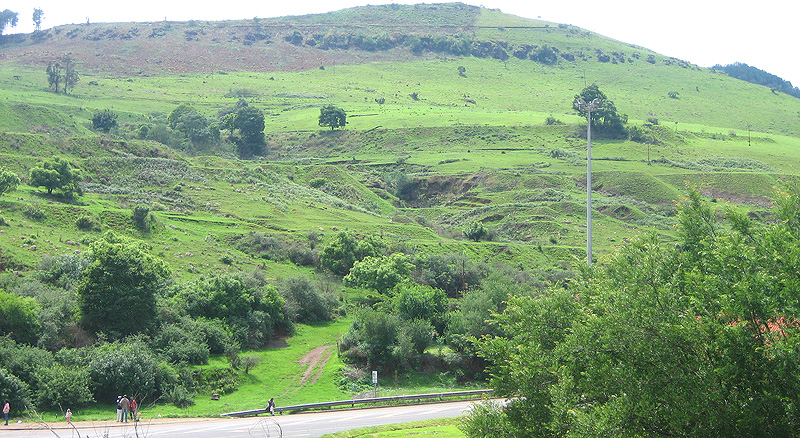
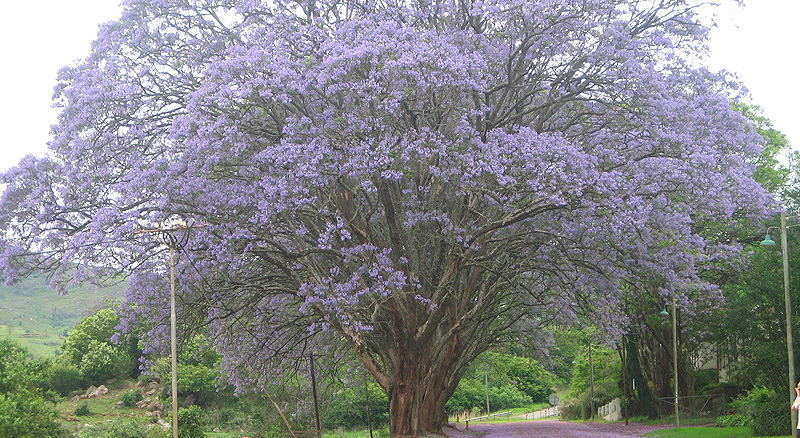
Pilgrim's Rest
Mining activities in Mpumalanga date back many centuries
to a time when unknown miners worked quartz reefs in the region for gold. In more
recent history, the historic mining and settler village of Pilgrim's Rest has
also seen a fair amount of mining activity. The small village was established in
1873, when a miner named Alex "Wheelbarrow" Patterson discovered alluvial gold
on the farm Poniekrantz. Patterson had made his way to the area from the Mac-Mac
region, in search of a less crowded site on which to mine. For a while
Patterson's discovery was kept secret, until a short while later another
prospector named William Trafford also discovered gold nearby.
News of further discoveries in the valley spread rapidly, and a mass arrival of
hopeful gold panners and prospectors from various locations across the country
and the world. The valley proved to be rich in gold deposits, and by the end of
the year there where almost 2,000 miners operating in the area. On 22nd
September 1873 Pilgrim's Rest was officially proclaimed as a gold field and grew
from a number of of tents and primitive shacks into a flourishing little village
featuring brick houses, a church, various shops, canteens, a newspaper and the
now renowned Royal Hotel. The village was named Pilgrim's Rest because after so
many failed attempts and disappointments, many of the diggers had found success,
and decided to settle there.
Over the course of time, the alluvial deposits in the region became scarce and
the locals turned to forestry. Mining in Pilgrim's Rest went on until 1971 when
the Beta Mine was closed down, however Transvaal Gold Mining Estates opened again
in 1999. Today there is active gold mining in the hills around Pilgrim's Rest.
In 1972 Pilgrim's Rest was bought by the government, and the entire town was
declared a National Monument in 1986. The historic old buildings were
painstakingly restored, and today visitors can explore the historic tin roof
houses on a series of guided walking tours. Pilgrim's Rest also features a
number of interesting historic buildings which are open to the public. These
include Alanglade House, which once served as the residence of the director of
the Transvaal Gold Mining Estate Ltd. The house is furnished with and still
contains many examples of period furniture of the 1920s, as well as paintings
and glassware.
The Dresden Shop Museum, also located in the scenic village, depicts a typical
general store from the period between 1930 and 1950, and features a house
attached to the shop. This house serves as a museum, and showcases the lifestyle
of a typical family of the era. At the store one could buy anything from
groceries, to whisky, tools, household articles and wide variety of other items.
A lot of old merchandise from the period is also exhibited in the store. The
small village is also home to a Digging Museum which features an interesting and
informative display and tour, which sheds light upon the lifestyle of the
region's original pioneers and the methods they used in panning alluvial
deposits.
Other historical sites of interest include the Sacred Heart Church, St Mary's
Church, Methodist Church and Dutch Reformed Church, and the cemetery. The
tombstones at the cemetery date back to the years of the original gold rush, and
were all laid facing in the same direction. One of these graves however, faces
in an opposite direction. This is the final resting place of an unknown robber
who was caught stealing from miners, and was chased out of town. His body was
found a few days later on the outskirts of Pilgrims Rest, and the town folk
buried him in their cemetery facing a different direction to the others graves,
possibly to serve as a warning for other thieves in the area.
For the more artistically inclined visitors, a number or interesting arts and
crafts outlets can also be found in a and around Pilgrim's Rest, one of which is
Ponieskrantz Arts & Crafts, located in downtown Pilgrims Rest. At Ponieskrantz
Arts & Crafts, all arts and crafts are manufactured on the premises by local
crafters, and include various items of pottery, stained glass, weaving, blown
glass glass and more. Apart from visiting the many historic sights of Pilgrim's
Rest, there are also an excellent series of hiking and mountain biking along
trails which lead visitors through thick indigenous forests. The area is also
well known for its decent trout fishing opportunities, and scenic forest
picnics.
For golfing enthusiasts, Pilgrim's Rest is home to a challenging nine hole golf
course with shaded greens. The magnificently well manicured course is situated
just out of town, and features peaceful scenic surroundings on the banks of a
small stream. The course's magnificent sandstone clubhouse once served as a
school in Rustenburg almost 500 km away in the North West province. The
structure was dismantled, and each stone was carefully numbered and transported
to Pilgrim's Rest, where it was rebuilt in 1985.
My Trip to Pilgrim's Rest
To add your holiday experience, please send any text and photographs to changes@wheretostay.co.za.
"A 4-day timeshare stay at Chrystal Springs in Pilgrim's Rest was a winner.
Great accommodation, restaurant, pub, tennis, squash, trampolines, etc. etc.
made for the perfect family getaway. The only downside was that sound travels in
these quiet mountainous regions and the units don't offer sufficient privacy.
Pilgrims Rest golf course is certainly worth a visit with it's 9 holes and 18
tee boxes. The liitle golf course can be pretty challenging with it's stream
creating frequent hazzards throughout the golf course. Pilgrim's Rest Golf
course is very quiet during the week, making it ideal for leisurely strolls -
There are a few golf cars for hire.
Our visit to the little historical mining town of Pilgrims Rest left us with mix
feelings; "car guards" and car washers can be a nuisance. The trading stores are
well preserved, reflecting the years gone by but the sale items leave much to be
desired and some lack marketing imagination.
Having said that there are some quaint pubs, restaurants and guest houses that
are worth a visit. Overall the town of Pilgrims Rest is worth a visit if you are
in the area but I would not go out of my way.
One should not lose sight of the fact that Pilgrims Rest and the nearby town of
Graskop make the perfect springboard for visits to the stunning natural wonders
of God's Window and The Blyde River Canyon. Our favourite discovery was the "boskombuis"
situated about 10 minutes outside of the Blyde River potholes. Typical home
cooked South African food in a charming, rustic "restaurant" on the rocky river
banks of the Blyde river.
All in all the town and surrounds of Pilgrims Rest and Graskop were much fun.
Kruger Park........here we come!!" - Avril and Frank
More sought after Pilgrim's Rest accommodation categories include Pilgrim's Rest pet-friendly and Pilgrim's Rest wheelchair-friendly accommodation. If you are specifically pursuing these Pilgrim's Rest accommodation categories, then we highly recommend that you contact the accommodation owner directly to ensure that the facilities are satisfactory and to your liking.
The Pilgrim's Rest pet-friendly accommodation and the Pilgrim's Rest wheelchair-friendly accommodation facilities can vary between large Pilgrim's Rest Hotels as well as small room only accommodation. Self catering Pilgrim's Rest accommodation will occupy the majority of these listings.
99% of all Pilgrim's Rest guest houses listed on WhereToStay will display rates for your convenience. Occasionally a Pilgrim's Rest guest house will ask you to request a quotation.
WhereToStay tries to keep the Pilgrim's Rest self catering and Pilgrim's Rest b&b standards at the highest levels relative to tariffs charged. Misleading advertising related to any listings of Pilgrim's Rest B&B and Pilgrim's Rest self catering accommodation should be reported so that WhereToStay can act accordingly.
See our full list of Pilgrim's Rest accommodation special categories at the top of this page
AFRIKAANS
WhereToStay Pilgrim's Rest Akkommodasie wissel van `n verskeidenheid van spesifieke categoriee soos Pilgrim's Rest selfsorg akkommodasie, Pilgrim's Rest, b en b blyplekke en nog veel meer.
Meer gesogte Pilgrim's Rest slaapplek kategoriee sluit in Pilgrim's Rest troeteldier-vriendelike blyplekke en Pilgrim's Rest rolstoel-vriendelike akkommodasie.
As jy spesifiek vrae oor die voorsetting van hierdie Pilgrim's Rest blyplekke, sal dit raadsaam wees om kontak met die eienaars te maak om te verseker dat die fasiliteite bevredend is en na you hart.
Die Pilgrim's Rest troeteldier-vriendelike verblyf en Pilgrim's Rest rolstoel-vriendelike vakansie blyplekke kan wissel tussen Pilgrim's Rest Hotelle asook klein kamer akkommodasie in Pilgrim's Rest. Pilgrim's Rest selfsorg slaapplekke sal die meerderheid van hiedie inskrywings beset.
99% van alle Pilgrim's Rest gastehuise gelys op WhereToStay sal pryse vertoon vir u gerief. Soms sal `n Pilgrim's Rest gastehuis vra om `n kwotasie te versoek.
WhereToStay probeer om die lys van Pilgrim's Rest slaapplek standaarde op die hoogste vlakke (relatief tot tariewe) gehef hou.
Misleidende advertensies wat verband hou met enige lys van Pilgrim's Rest blyplekke moet aangemeld word sodat WhereToStay kan daarvolgens optree.
TOUCH