Eshowe Accommodation
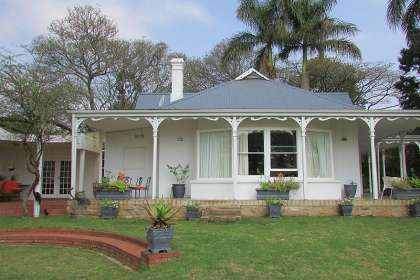
Sugar Hill Manor Guesthouse
Bed & Breakfast Accommodation in Eshowe
Zululand & Maputaland
The moment you arrive at the Sugar Hill Manor Guesthouse in Eshowe you will feel welcome and at home. Set in a large, 100-year-old Victorian home with magnificent country views. …see more for bookings / enquiries and info.
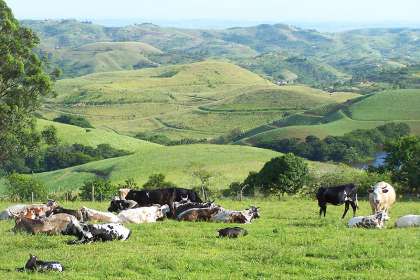
Chase Guest House
Bed & Breakfast Accommodation in Eshowe
Zululand & Maputaland
Chase Guest House is a traditional sugar farm homestead in a beautiful garden bordering Eshowe, offering country hospitality, healthy breakfasts and personal service. Relax in two spacious, up-market well-appointed double garden cottages …see more for bookings / enquiries and info.



Raphia on Sea
Self Catering Apartment, Flatlet Accommodation in Mtunzini
29km from Eshowe
Raphia on Sea is a lovely self contained apartment with a lounge and kitchen, 2 bedrooms one with a king size bed the other with 2 beds. Full cable/ DStv with aircon, fully serviced. …see more for bookings / enquiries and info.
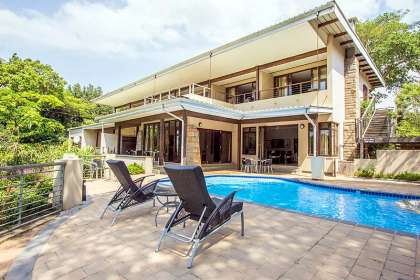
One-On-Hely
Bed & Breakfast Accommodation in Mtunzini
29km from Eshowe
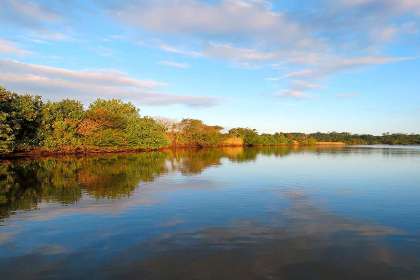
Mtunzini - A village blessed with a sub tropical climate offering stunning views over the Umlalazi Nature Reserve and the warm Indian Ocean is set in a Nature Conservancy and has no high rise buildings. …see more for bookings / enquiries and info.

Eshowe
Eshowe Holidays - Zululand Tourism, KwaZulu Natal
Click here for Eshowe Accommodation
The wind blowing through the trees of the Zululand & Maputaland Dhlinza Forest is said to have inspired Eshowe's name, the 'city set on a hill', where Zulu Kings used to reside. Eshowe's Dhlinza Forest will delight visitors with wonderful walks and trails, and has the only aerial boardwalk in the Southern Hemisphere, from which one can commune with the birds, vervet monkeys, wild pigs, blue and red duikers, and bushbuck. Deep within the Dhlinza Forest is the Bishop's Seat, where one of the first Bishops of Eshowe would sit and plan his next sermon. Today, this spot is used by the town of Eshowe as a venue for their nativity play, which is staged there every three years. Wrapped around the lush green Dhlinza Forest, Eshowe is abundant with unequalled fauna, flora, bird life and butterflies, and endless views of the exquisite North Coast Zululand plain, sugar plantations and orchards.
While in Eshowe, a 'must visit' is the Vukani Museum, which houses some of the best examples of Zulu pottery, basketry, beadwork and tapestries, done by artists who have gone on to receive international recognition.
For the sporty person, the Eshowe Hills Golf Club boasts a challenging 18 hole par 72 golf course, 6 all-weather tennis courts, 2 squash courts, and a club house which has a wellness centre.
Eshowe is the Zululand & Maputaland town known to have a flower blooming in a tree every day of the year, and is the ideal base to visit the KwaZulu Natal Battlefields, North Coast beaches, Hluhluwe Umfolozi Big Five Game Reserve, the Zululand Birding Route and KZN Brew Route.
Also visit towns near Eshowe, Zululand:
Gingindlovu, Zululand - 26.2km from Eshowe
Amatikulu Beach, Zululand - 34.9km from Eshowe
Mtunzini, Zululand - 44km from Eshowe
Melmoth, Zululand - 51.7km north of Eshowe
Tugela River Mouth, Zululand - 63.7km from Eshowe
Afrikaans alternate search phrase - Eshowe akommodasie or Eshowe akomodasie.
Eshowe Accommodation - Zululand & Maputaland, KwaZulu Natal
Eshowe is known as the town which has a flower blooming in a tree every day of the year, and is abundant with unequalled fauna, flora, bird life and butterflies, and endless views of the exquisite North Coast Zululand plain, sugar plantations and orchards.
Set on a hill, Eshowe is wrapped around the lush, green Dhlinza Forest, which has the only aerial boardwalk in the Southern Hemisphere, and will delight visitors with wonderful walks and trails, where one can commune with the birds and wildlife.
While in Eshowe visit the Vukani Museum, which houses some of the best examples of Zulu artistry; quench your thirst at the renowned Zululand Brewery; browse the 'Made At Home' market, and experience the rhythm of Africa at Shakaland (14km outside Eshowe).
Go golfing at the Eshowe Hills Golf Club, which also offers tennis courts, squash courts, a club house and wellness centre.
Eshowe is also the ideal base to visit the KwaZulu Natal Battlefields, North Coast beaches, Hluhluwe Umfolozi Big Five Game Reserve, the Zululand Birding Route and KZN Brew Route.
Eshoweoffers the Zululand visitor overnight accommodation in traditional Eshowe Guest House accommodation nestled in evergreen parklike gardens, as well as Eshowe Self Catering accommodation bordering the indigenous Dlinza Forest.
Visit The Where To Stay Zululand & Maputaland, Eshowe Accommodation Page
It is our mission to search for, and recruit a wide selection of suitable Eshowe accommodation, particularly the more popular categories such as Eshowe Bed and Breakfast accommodation, and Eshowe Self Catering accommodation.
We strive to present a mixture of upmarket Eshowe accommodation, and affordable accommodation (to suit all pockets and tastes).
More sought after Eshowe accommodation categories include Eshowe Conference accommodation, and Eshowe Wedding accommodation. If you are specifically pursuing these special Eshowe holiday categories, then we highly recommend that you contact the property owners directly to ensure that the facilities are satisfactory and to your liking.
See our full list of Eshowe accommodation special categories at the top of this page.
If in doubt about facilities and quality, we recommend that you consider "regularly inspected" Star Graded accommodation in Eshowe, Click here to see our Star Graded Eshowe accommodation page.
99% of all Eshowe Guest Houses listed on WhereToStay will display rates for your convenience. Occasionally an Eshowe Guest House will ask you to request a quotation.
WhereToStay tries to keep the Eshowe Self Catering and Eshowe B&B standards at the highest levels relative to tariffs charged. Misleading advertising related to any listings of Eshowe Bed & Breakfast's and Eshowe Self Catering accommodation should be reported so that WhereToStay can act accordingly.
Be sure to check our other Special Categories for Eshowe accommodation - Fresh-Water Fishing, or Eshowe accommodation - Quad/4x4/Bike Trails.
You can find suitable Eshowe accommodation properties via our Map Search or our other simple Quick Search options on WhereToStay - Simply fill in the desired town or suburb then the desired category..........and you're away. You may get lucky and find some of our SPECIALS that are advertised from time to time - look out for the *Accommodation Specials* on our multitude of holiday accommodation listings.
Afrikaans alternate search phrase - Eshowe akommodasie or Eshowe akomodasie, or Eshowe selfsorg akomodasie or Eshowe gastehuis akommodasie or Eshowe b&o.